

Physique Memorabilia
Kent Masters and the Parrots of 12th Street

While making my Pee-wee Herman documentary, I spent a lot of time with Paul Reubens looking through his expansive collections. He was an amateur historian of kitsch, prolifically collecting paintings, lamps, toys, vintage Christmas decorations, ashtrays, yearbooks— anything you can imagine. Paul’s collections were so significant that my production rented an enormous warehouse with the intention of staging a private museum, where Paul could unpack inspirations from the past.
Within this vast archive, there is an extraordinary collection of 1950s physique magazines. I had seen vintage copies of Bob Mizer’s beautiful publication Physique Pictorial at the now shuttered Circus of Books in West Hollywood. Paul’s collection, however, rivaled the ONE Archives (an essential repository of queer cultural artifacts). Sadly, Paul, like many other gay men who originally collected these magazines and photographic prints via mail order, was subjected to a homophobic witch hunt by law enforcement. He was cleared of any wrongdoing, which is covered in my film.
When Paul and I were looking at some of this collection, he mentioned a unique store of physique photography and vintage gay publications in New York, blocks away from the Soho loft where he filmed the first season of Pee-wee’s Playhouse in 1985. He described a private second floor space, run by an eccentric man, who would often be talking to his parrot.
I made a mental note to find out more about this store, but sadly never asked Paul the name. Nothing came up through cursory internet searches, and I figured Paul made up the parrot detail because that sounds like the kind of thing Paul Reubens would make up.
Then last week, my friend Scott Treleaven mentioned he was meeting up with Vince Aletti—the legendary queer photography critic, curator, and collector. I asked him to find out if there was indeed a vintage gay bookstore with a loquacious parrot in the city, and of course, Vince knew the establishment– Physique Memorabilia. He frequented the store weekly for the better part of a decade.
This past Sunday, I went over to Vince’s apartment in the East Village– a veritable museum of queer image-making, stacked floor to ceiling with rare photography books and artwork. We sat at a table by the window with piles of small vintage physique photographs between us. Below is what he told me about Physique Memorabilia and its eccentric proprietor Kent Masters.


Vince: As a kid, any regular newsstand would have muscle builder magazines. I first saw one in a grocery store in New Jersey when I was eight or nine years old, which would have been 1953.
In high school, we were living in Fort Lauderdale, and there was a somewhat more sophisticated out-of-town newsstand with an extensive magazine collection, and they had physique magazines. They were small enough to slip into your back pocket. I started buying them for myself because they were only 25 or 35 cents, and I’d keep them under the mattress so my mother wouldn’t find them.
Later, I’d learn about Bob Mizer and the Athletic Model Guild (AMG). These images were circulated as physical photographs that he sold by mail order in the 1950s. He had his own publication, Physique Pictorial, but his pictures appeared in a lot of other magazines too. The models weren’t naked, but what he sent through the mail discreetly could be naked. If found out though, he might be arrested, which I believe he was twice.


I don’t know how I found Physique Memorabilia. Another gay friend must have discovered it and brought me, probably in the mid-1970s. The idea of Physique Memorabilia was going back to all this material that was now kind of classic. There were things in the store from the 1940s and earlier pictures that were rarer, but physique photography was over by the mid-70s, so you know, it focused on a period.
I was working at The Village Voice at the time in a space off Union Square, so between my East Village apartment and that office was the store. It was a place that I could go to on my way home from work if I didn’t really have anything much to do. There was definitely not a public sign or a name on the buzzer—it was really very private. You had to know about it.
You’d go up to the second floor to a quite large floor-through loft that I believe he lived in the back of. The front room looked over the street with a wall of windows. I remember it being kind of dark with curtains though. Light is not good for photographs, but it just always had this kind of underground sense, which was totally appropriate.


There were three or four long tables around the main space with boxes on top. They had everything: piles of magazines, all different sorts, including muscle magazines, lots of boxes of photographs, just loose. For me, and for a lot of people, I think that made it more fun to plow through all the stuff. Very little of it was organized and every time I went, I would discover new things, even if I’d been through that box before. He had reels of film, some actual physique paintings on the wall, some just sort of stacked around. It was fairly crowded.
Yes, it seems to me there were two parrots, but maybe there was just one. It was like, you know, a really large parrot and a noisy one. I don’t remember it talking. I just remember it squawking a lot, and it was in a very big cage off to the side, but behind a lot of other stuff.
The owner, Kent Masters, would sit at a sort of raised desk on a platform, so he could overlook everything. He had one or two stools in front of that, where people could sit and talk to him. It was made clear to me at the very beginning that if I didn’t buy something I couldn’t come back, but once you had bought something, you could go and browse for hours. At least once a week, especially if it was a rainy day like today, I could just go over there and spend two hours looking through stuff. It was the perfect easy getaway. Everything was one to five dollars, so I would typically leave having spent thirty dollars.
Kent was an older, sort of gray-haired bear type. He must have been in his sixties or seventies when he was running the store—at least twenty, if not thirty years older than me. Kind of gruff. He thought he was clever, and he was fun. Sometimes if it was a cold day, he would make soup and serve it to the people that he knew in the store.
I rarely talk to people in stores. Some people would really be pals with him, and others would clearly bring him things. Although I don’t remember being there when anyone showed up with material. I just didn’t feel like I had much in common with the other customers, except we were all looking for the same thing. It’s just not like me to have conversations with people who are, you know, buying the same thing. We were all competing.


That was pretty much the beginning of my collecting. I started occasionally collecting photographs from some of the galleries in the neighborhood, and I had already become friends with Peter Hujar, so I had a number of Hujars. But I wasn’t thinking of myself as a collector at that point because I didn’t have the money to do that. That was the pleasure of the physique stuff—I could accumulate nearly fifty new physique photos, and you know, spend maybe fifty dollars.
I always felt Kent was giving me a good price. The more I got, the more I wanted, and the more I became interested in the variety of material. I really started out with things that I thought of as classic physique, like Bruce of Los Angeles—very beautifully made and staged. But the more I was at the store, the more I got interested in oddities.
The main studios would stamp their photos, so they were identified. Studios like Douglas of Detroit or Western Photography Guild. The Athletic Model Guild didn’t stamp for the most part, but the style was so immediately apparent. They weren’t as well staged, they were more fun, more playful in terms of posing, and also it felt very, “let’s put on a show” with Hollywood backdrops. The photographer Bob Mizer used rear projection, like a field or an urban street. There were projections of ships, so the guy was supposedly a sailor with a whole elaborate ship projection in the back.
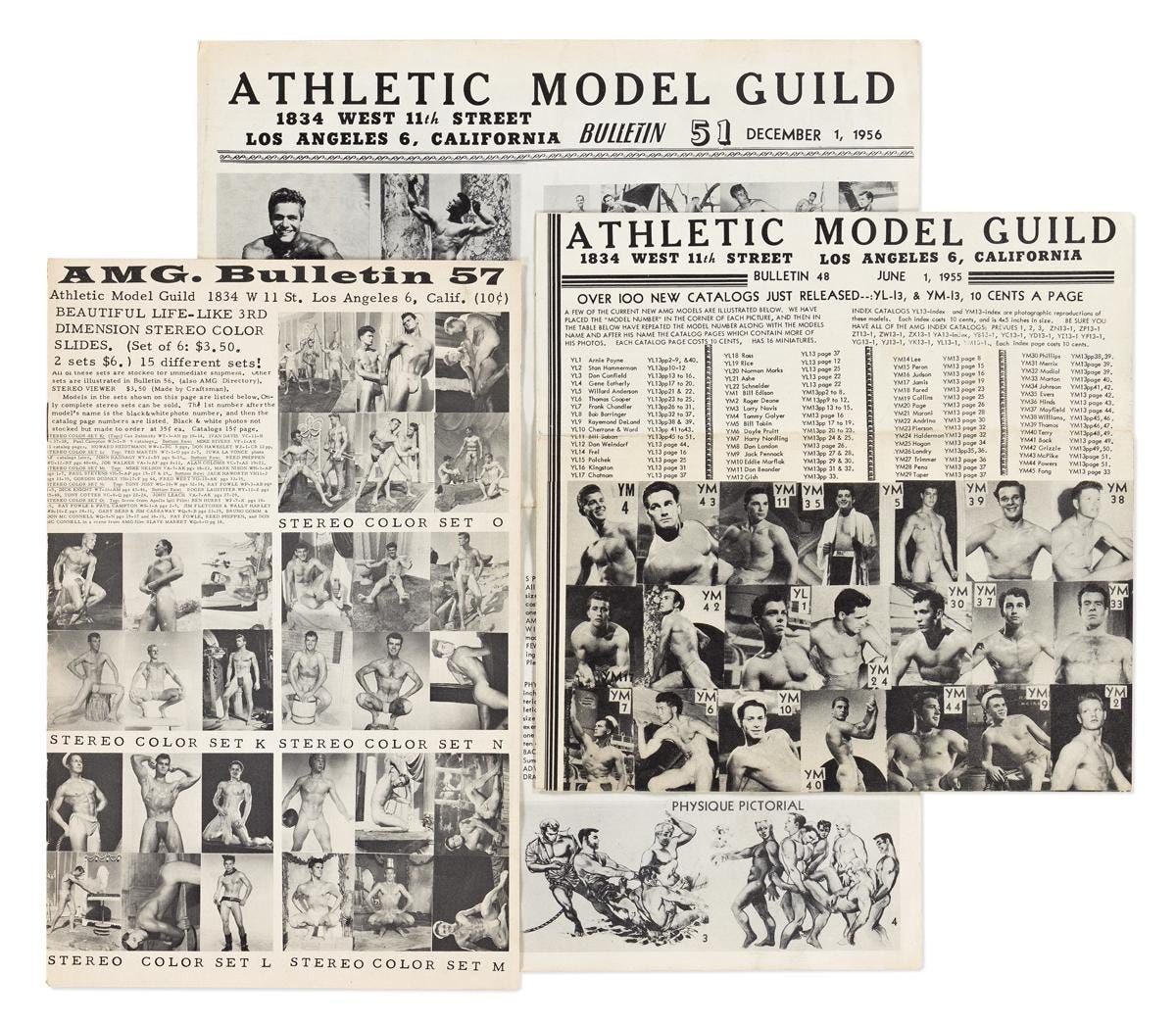
Apparently, AMG had a compound of houses that Bob Mizer bought one by one, and his mother lived in one, he had a studio, and there were others. The more you see of the work, the more you get a sense of how he built things, like paper-mache mountains.
At one point early in the 1950s, he created this 1000 model directory, which I think is one of the great books. The idea that there are these one thousand guys who went through this one studio in a relatively small period of time, and that it was just the beginning—it was this voracious kind of situation. Whoever showed up, as long as they had a decent body, could pose and be immortalized. I would guess that most were would-be actors, but you know, mechanics, pool boys, out of work people, soldiers, all kinds of ordinary good-looking guys.


I later discovered the studio Kris from Chicago. Kris was into super masculine, really butch guys, and it turns out the photographer also was a kind of Mr. Leather guy, so there’s lots of fetish. I also started buying photographs from a studio called Frontier Athletic Club. They’re not like anything else that I ever found because of their amateurish quality. The models had names and were sort of setting up a narrative.
The longer I went to the store, the more I found really eccentric things, and that was kind of what kept me going back.


Eventually I started going to Physique Memorabilia less. I felt like I’d gotten a lot already, and maybe I just wasn’t finding as much as I expected to, and you know, there are other things, other demands.
I hadn’t been there in a while, and Kent called me and said, “I’m moving to New Jersey and closing the store, but I have some deals going on with people who are getting rid of material that I know you like.” He said, “I’d be happy to get this for you, and just put it aside.” He charged me $500. At that point, I had a more steady job as an editor at the Voice, so I paid the money.
I never saw him again.
It was an unpleasant way to end what I thought was a very fun relationship. He’d always been upfront with me and honest, and it was shocking to me that he would do that. I talked to two other people that knew Kent, and he’d already burned them as well.


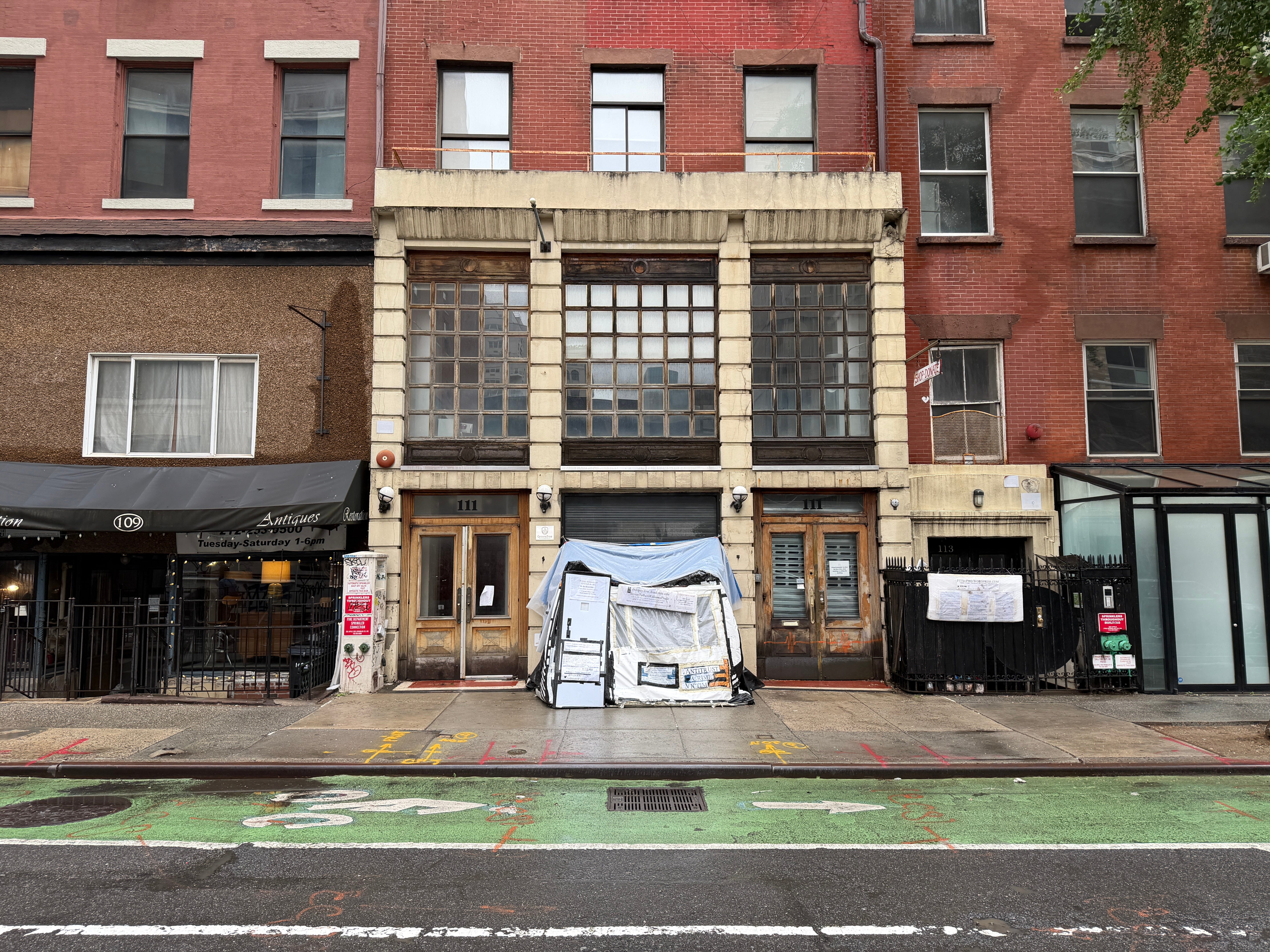
After meeting Vince, I went down to 111 East 12th Street to take a picture of the former Physique Memorabilia building. The storefront—once a decent thrift store—is now vacant. A conspiracy theorist lives in a tent out front, and across the street is a NYU dorm behind the facade of a demolished church.
I found a New York gay history Facebook group, where the collector Nicholas Newman posted about Physique Memorabilia. He remembers returning to a nearly empty loft in 1989 where Masters bitterly greeted him. The store was closing because a competing shop in the West Village, Gay Treasures, allegedly purchased huge quantities of Masters’ inventory to flip at a higher price.
In a lengthy comment thread, a man named Britton says, “I may be the guy you mention who was buying so much stuff. I bought Bloomingdale’s and Macy’s bags full of vintage physique mags and photos time after time after time. It formed the core of a vast museum-worthy collection I still have to this day, although I have sold off a lot of the material over the years on eBay. But as my 100% positive feedback attests, the people who’ve bought that material from me love it as much as I did for the 30 years or so that I kept it.” Currently nothing is for sale, but Britton’s Titanus Gallery has sold 34,000 items.
There are no traces of Kent Masters on the internet, except for several ebay auctions for 5x7 prints of a nude physique model named TOM from 1975. The back of each print has an official Kent Masters stamp with his storied address: 111 East 12th Street.
I just wish somebody remembered the name of the parrot.
—
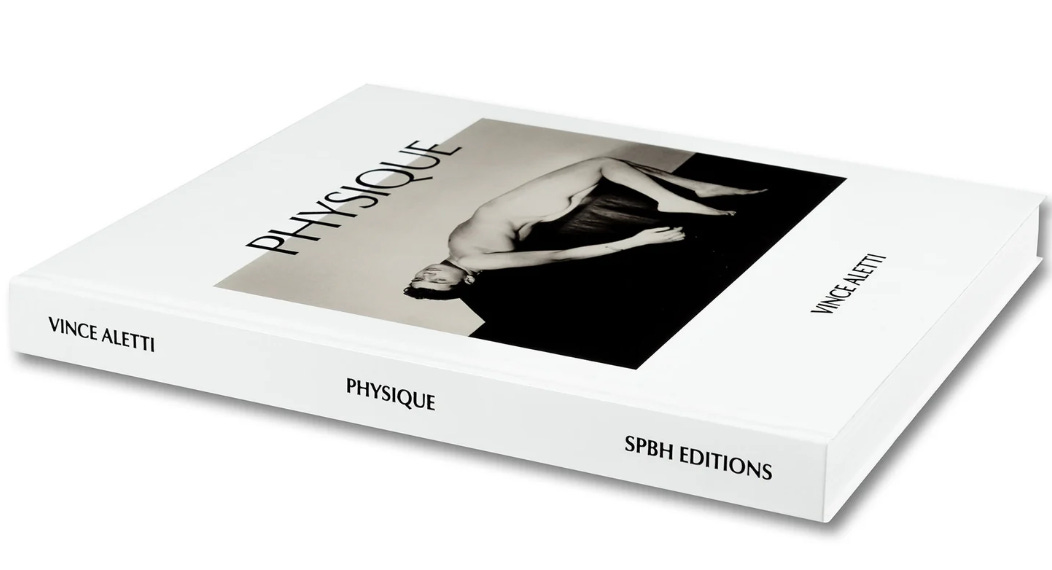
I highly recommend you buy Vince Aletti’s beautiful book Physique, drawn from his amazing collection.
It’s been a while since I’ve written on Substack, but for good reason. Last year my film Pee-wee as Himself came out, and I hope you’ll watch it on HBO Max. I also wrote an essay in New York Magazine about my fraught relationship with Paul. All that led to the amazing opportunity to write a book for Bloomsbury called Trust Me about the relationship between documentary filmmakers and their subjects. The book will discuss my collaboration with Paul, but will also feature a variety of films by other documentarians and the complex interpersonal dynamics behind the scenes. Stay tuned…
❤️❤️❤️❤️❤️❤️